SNOWY OWLS: Have you seen these Arctic visitors yet?

Posted in Birds | Tagged , , , | Leave a comment

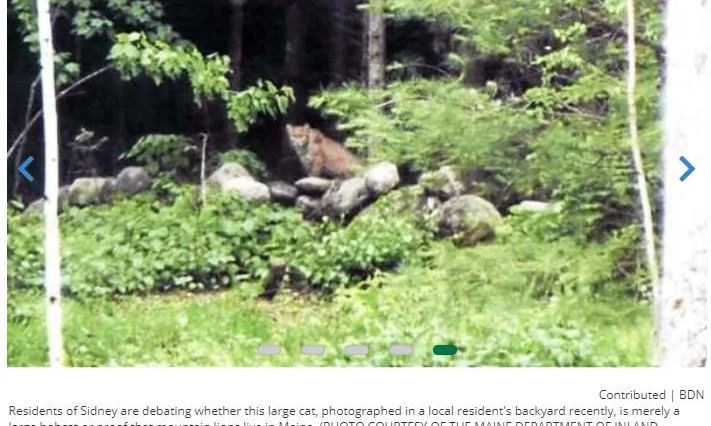
CREATURES: Fabulous Bobcat photo from Campobello

This fabulous photo was taken yesterday (Jan 23) by Harold Bailey of the Roosevelt Campobello International Park.

Thanks to Vern McKimmey for the heads-up!


Posted in Uncategorized | Tagged , , , | Leave a comment

BIRDS: Strange and beautiful winter sightings.


Varied Thrush

This bird a first year thrush, the Varied Thrush is normally found in the Rocky Mountains and Western N.A. It is a wonderer and some birds are found every year in most parts of the continent. It will eat seeds and berries, and like the Robin; worms.


Posted in Birds | Tagged , , | Leave a comment

FISHERY: MIGHTY POWER OF SMALL FISH EXPLORED IN NEW TV DOCUMENTARY
Halifax, Nova Scotia – January 9, 2012 – Most people have tried them at least once and we often claim to feel squeezed like one. Some people eat them daily while others can’t stomach the smell or their texture. They pack a healthy punch of omega 3 fatty acids and mega doses of vitamin D. Love or hate them, sardines are one amazing fish.

The Last Sardine Outpost is a half hour documentary that explores the last remaining sardine processing plant in North America located in Blacks Harbour, New Brunswick.  The survival of Connors Bros. cannery and the associated fishery defies the odds and is due primarily to the resourcefulness and determination of the 900 residents of this tightly knit coastal community.

The film reveals the world of sardines: from the pristine waters of the Bay of Fundy to the fishing boats that deliver their silvery bounty to the cannery, and from the bustling processing line to store shelves around the world.

The Last Sardine Outpost is written and directed by Latonia Hartery and produced by Edward Peill from Halifax-based Tell Tale Productions Inc.

“This story is all about heart. The people in Blacks Harbour are doing everything possible to keep a 120 year old industry alive – it’s very impressive,” says director Latonia Hartery. “The community is very passionate about maintaining its way of life and if anyone can adapt and make it work it’ll be them.”

In 2010, facing cheaper imports from Asia and South America, the last sardine cannery in the United States closed its doors. This catapulted Connors Bros. into the position of North America’s last remaining – and the world’s largest – sardine processor. Blacks Harbour is hailed as the “Sardine Capital of the World” but the longevity of that title is uncertain. The company was recently sold to a group of UK venture capitalists. The future of the cannery – and the entire community – now hangs in the balance.

The Last Sardine Outpost will be broadcast on CBC Television’s Land & Sea on Sunday, January 22, 2012 at 12 Noon. Following the broadcast, the documentary can be watched on the CBC TV website at:  www.cbc.ca/landandsea. Land & Sea is one of CBC’s longest running TV series and can be followed on Twitter: @cbclandandsea

The Last Sardine Outpost was produced in association with CBC TV with funding from Film NS, and Provincial and Federal tax credits.

Posted in Fisheries | Tagged , , , , | Leave a comment

Wonderful Fundy Maine

For those who didn’t know, the Bay of Fundy is shared by Nova Scotia, New Brunswick, and the northeastern shore of the State of Maine, United States. One of the most wonder-full Fundy locations is Cobscook Bay, just across the border from Campobello and Deer Island in New Brunswick.

Cobscook Bay is one of only four areas recognized as “ecologically significant” by the State of Maine. There is much to discover here … spectacular and unique invertebrates exposed by the falling tides, birds galore, squid, fish, fossils, geological treasures and much more. The State publication describes it as follows:

Cobscook Bay has the highest density of nesting bald eagles in the northeastern United States. The bay’s waters are exceptionally productive and host a high diversity of plant and animal species. In Cobscook Bay, the tide rises and falls an extraordinary 24 feet. Each tide brings a fresh supply of nutrients from the ocean. The nutrients support growth of seaweeds and algae, which are eaten by shellfish and other animals. During spring and fall migrations, thousands of shorebirds use Cobscook Bay as a stopover for resting and feeding.
Learn more at the official Maine site located here.
Media Credits: State of Maine Website
Enhanced by Zemanta
Posted in Parks & Museums, Places | Leave a comment

PARKS: Fundy Wonders Preserved at Fundy National Park

Fundy National Park of Canada encompasses some of the last remaining wilderness in southern New Brunswick. Here, the conifer dominated Caledonia Highlands roll down to meet the fog-generating Bay of Fundy. The tidal fluctuation of the Bay of Fundy is the highest in the world. Watch fishing boats come and go to the rhythm of the bay. Inland, explore lush forests and deep stream valleys (from Parks Canada). Learn More at Parks Canada.

Thanks to the wonderful photographers at Flicker.com!

Posted in Parks & Museums | Leave a comment